Products > Risk Management
What is Risk management?

1 in 3 Fleet accidents
are caused by speeding or aggressive driving behaviours that are fully measurable, and preventable.

68 % Of fleet managers report
having no reliable way to identify high-risk drivers before an incident forces the conversation.

48% Average reduction in high-risk driving event
within 8 weeks of deploying a driver scoring system.
Most fleet accidents are preventable. Here’s why they still happen.
Without the right data, fleet managers are always one step behind. Reacting to incidents instead of preventing them. Here's what that looks like and what changes when you can finally see ahead.

Without Ekkofleet
No visibility on which drivers are putting your fleet at risk
Incidents discovered after the damage is done
No evidence to defend your drivers in accident disputes
Insurance premiums based on assumptions, not your actual track record
With Ekkofleet
Individual risk scores updated in real time for every driver
Proactive alerts that let you act before accidents happen
Timestamped impact data, speed records, and location context
Compliance reports and scoring you can share directly with your insurer
Built to detect risk, respond fast, and drive lasting improvement across your entire fleet.

Security Score
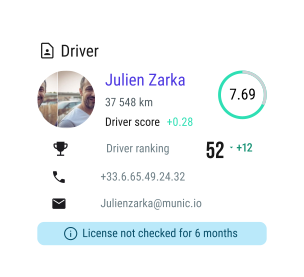
Measure every driver's risk level based on real driving data: speeding, harsh braking, sharp cornering, and rapid acceleration. Scores update automatically so you always know who needs attention first.
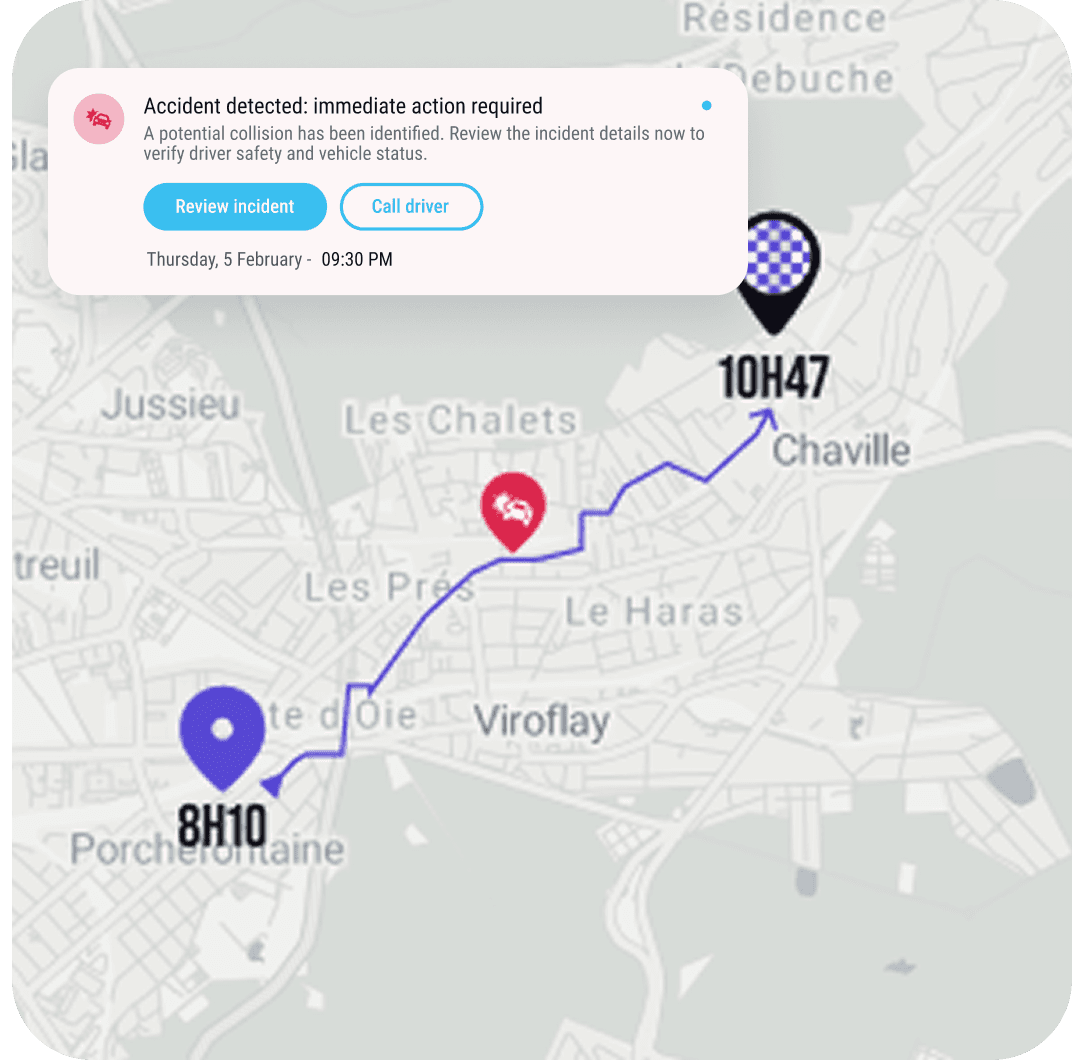
Impact & Accident Detection
When a collision happens, you know in under 30 seconds. Location, vehicle speed, G-force data, and road context. All captured at the moment of impact, no manual reporting required.

Speed Compliance Monitoring
Every vehicle's speed is continuously compared against the posted limit on the road it's traveling. Overspeed events are logged automatically and included in exportable compliance reports.
Driver Coaching & Progress Tracking
Turn scores into action. Share individual risk ratings directly with drivers, track progress over time, and measure the impact of every coaching conversation. Most fleets see measurable gains within 4 to 8 weeks.
Draw a zone around any location — a depot, a customer site, a restricted area. The moment a vehicle crosses that boundary, you're notified. No manual monitoring, no delayed discovery.

Impact detected
MUNIC hardware sensors register the collision in real time: G-force, speed, and direction all captured at the moment of impact.

Alert sent
Your fleet manager receives a notification in under 30 seconds, with location, road type, and vehicle data already attached.

Context assembled
Speed at impact, G-force severity, and a timestamped event log are packaged automatically, no manual input, no waiting.
Report ready
A complete incident report is available immediately. Use it for insurance claims, legal protection, or internal review.
Fleet Manager
Today
You find out a driver has been speeding when there's already an incident to deal with. Coaching conversations happen on gut feel, and you have nothing concrete to show if someone pushes back.
With Ekkofleet
A weekly Security Score ranks every driver by risk level. You walk into every coaching conversation with data, not instinct. Problems get addressed before they become incidents.
Operations Manager
Today
Compliance reports mean hours of manual work. Pulling data from different sources, formatting it, hoping nothing was missed. Audit season is a stressful scramble every single time.
With Ekkofleet
Every event logged automatically. Compliance reports generated on demand. Audit-ready at any point, without a single extra admin hour.
Business Owners
Today
An accident happens. You don't know what the driver was doing, what speed they were going, or whether you have anything to defend yourself with. The repair bill is the least of your problems.
With Ekkofleet
Every incident comes with a complete data record: speed, G-force, location, driver score history. You have the documentation to protect the business before a lawyer asks for it.

GPS tracking shows vehicle location. Fleet tracking goes further by combining location, trips, mileage and usage context to support operational decisions, compliance and reporting.
What is fleet risk management?
How is a driver safety score calculated?
What data is captured when an accident is detected?
Can driver behavior monitoring reduce insurance premiums?
How does speed compliance monitoring work?
What's the difference between a dashcam and an impact detector?
Can drivers see their own safety scores?
How long before we see improvement after deploying risk monitoring?


